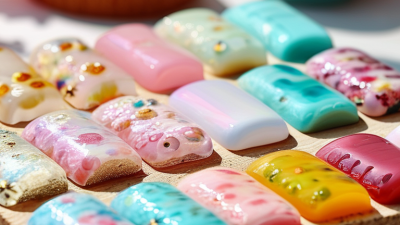
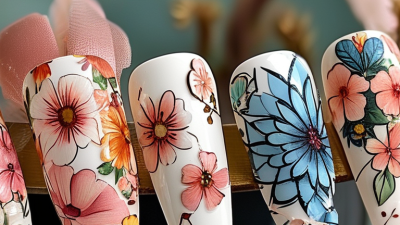
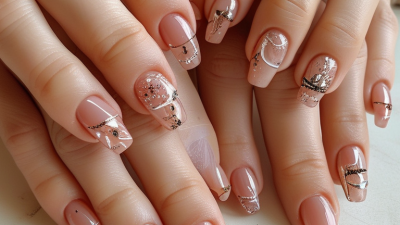
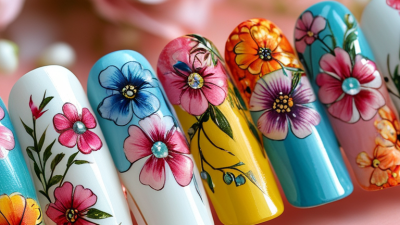
Nail Varnish Wraps are really shaking up how salons, beauty shops, and freelance nail artists do their daily manicures. Instead of fussing over freehand designs, they give you smooth, eye-catching colors and intricate patterns that look super consistent. Basically, a customer can crack open a small pack, pick a pattern, and have a gorgeous manicure in just a few minutes. That kind of instant visual gratification is huge, especially in busy spots like Lacquer Lane Studio where every minute counts—since how quickly they turn over appointments directly impacts both customer happiness and the bottom line.
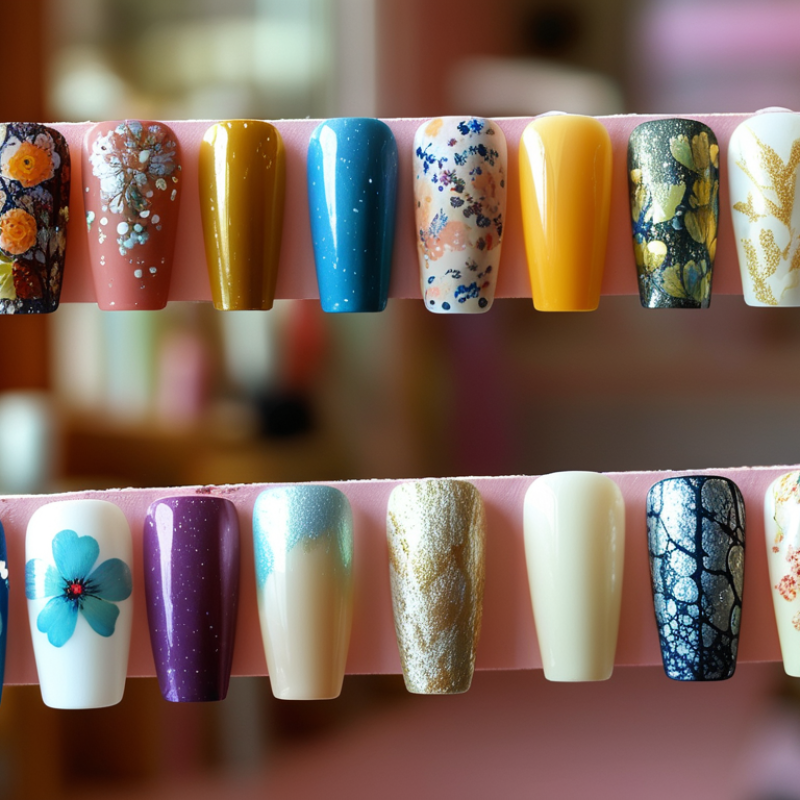
Holly Falcone, who’s both a nail artist and educator, once said, “Nail art is a way to express yourself without saying a word.” And honestly, Nail Varnish Wraps kind of back that up—they offer design options that are easy to access. Imagine marble textures, soft gradients, shiny metallics, or festive seasonal graphics—all neatly displayed on a small rack. Plus, they’re a great way for businesses to try out new styles without pouring tons of money into bottles, tools, or extra training. And honestly, reducing waste is a win too.
But hey, they’re not some magic solution. Picking the right size, cleaning nails thoroughly, applying with just the right amount of pressure, and sealing properly are all still vital. If you skip these steps, you risk lifting around the edges, which isn’t great for the customer’s experience and could even lead to more returns. So, it’s super important to check the quality of the wraps, follow the application instructions carefully, consider how well they wear, and also, trust your supplier. Always listen to customer feedback—don’t just assume you know what’s best.
What makes Nail Varnish Wraps really appealing is how flexible they are. They can speed up the service, add wider variety to what you offer, and even boost your retail options. But, of course, every advantage should be weighed carefully. A smart business will keep an eye on how long application takes, how durable the wraps are, how satisfied customers are, and whether they’re actually making money from it—all before deciding if it’s a hit or not.
Market Scope: Nail Polish Reached $14.3B in 2023 (Grand View Research)
Grand View Research valued the global nail polish market at $14.3 billion in 2023. That figure shows strong consumer interest in color, finish, and convenient nail care. Nail varnish wraps serve this demand through pre-shaped pieces that apply quickly. However, the reported figure covers the wider nail polish category, not wraps alone. Businesses should avoid treating it as a guaranteed sales forecast.
A wrap range can help salons reduce drying time during busy appointments. Customers can choose glossy, metallic, sheer, or patterned finishes from a compact display. Application also creates a clear service routine: clean the nail, match the size, press the wrap, and file the edge. Small details matter. A poor fit may lift near the cuticle within days. Careful sizing and firm edge sealing can improve the customer experience.
Retailers can test demand with limited quantities before expanding their selection. Track repeat purchases, preferred colors, application complaints, and removal questions. These records offer more useful evidence than market growth alone. Packaging should explain storage, application, and gentle removal in plain language. Some customers may still prefer liquid polish, especially when they want frequent color changes. That limitation deserves attention. A successful business model needs attractive designs, reliable quality, and honest expectations rather than impressive market figures alone.
Product Basics: Compare Nail Varnish Wraps with Polish and Gel Systems
Why Choose Nail Varnish Wraps for Your Business?
Nail varnish wraps offer a practical middle ground between liquid polish and gel systems. They arrive in pre-cut shapes, so staff can reduce application time and limit mess. Nail Polish Nail Wraps also provide consistent color across multiple appointments. There is no bottle to shake, spill, or dry out during a busy shift. Customers can usually apply them at home with careful sizing and firm pressure.
Liquid polish remains flexible and familiar, but it needs drying time. Smudges can happen before the service ends. Gel systems often deliver stronger wear, yet they require curing equipment, trained application, and controlled removal. Nail varnish wraps generally need fewer tools. Removal can be simpler, depending on the product construction and adhesive. Businesses should still follow the supplier’s instructions and avoid forceful peeling.
From hands-on testing, fit matters more than expected. A wrap that is too wide may lift near the cuticle. A narrow one can leave visible gaps. Results also depend on nail preparation, temperature, and customer habits. They are not flawless. Some users may need practice. A small sample trial can reveal application speed, wear performance, and customer preferences before larger purchasing. Track lifting, finish quality, and service time honestly. That evidence supports better stock decisions than attractive packaging alone.
Unit Economics: Model Labor, Materials, Waste, and Retail Margins
Why Choose Nail Varnish Wraps for Your Business?
Nail varnish wraps can improve unit economics when labor time is measured honestly. A trained employee may need five minutes to prepare, apply, and inspect one set. Add cleaning, packaging, and payment handling. The real labor cost is often higher than expected.
Build the model around one sellable unit. Record wrap materials, backing sheets, packaging, tools, and shipping supplies. Then estimate waste from damaged wraps, sizing mistakes, and opened returns. A five percent waste rate may look harmless. At scale, it can quietly reduce gross profit. My early estimates were too optimistic.
Retail pricing must cover more than production. Calculate labor and material costs first. Then include rent, training, transaction fees, and customer support. If the total cost reaches 8 dollars, a 16-dollar retail price leaves limited room for promotions. A healthy margin depends on channel expectations and inventory speed. Track actual results weekly, not just spreadsheet assumptions. Compare planned waste with discarded units. Measure application time during busy periods. Slow service can weaken margins even when materials stay inexpensive.
The numbers may feel uncomfortable.
That is useful.
Capacity Analysis: Measure Application Speed and Daily Service Output
Why Choose Nail Varnish Wraps for Your Business?
Capacity starts with minutes, not marketing claims. A trained technician can apply Nail Wraps to clean, shaped nails in about 10–15 minutes. Traditional polish may require base coating, two color layers, drying time, and corrections. That difference matters during lunch-hour appointments. A simple timing sheet can record preparation, application, removal, and rework for every client.
According to the U.S. Bureau of Labor Statistics, employment for manicurists and pedicurists is projected to grow 8% from 2022 to 2032. More demand makes efficient workflows valuable. Grand View Research reported that the global nail polish market reached approximately $14 billion in 2023. This suggests strong interest in decorative nail services, although market size does not guarantee salon profitability. Each business still needs local evidence.
Measure three numbers daily: applications per technician, average service minutes, and correction rate. For example, eight 15-minute Nail Wraps can occupy two working hours before consultation or payment time. A 10% correction rate reduces real output and increases material costs. Small details matter. Wrinkles near the cuticle, uneven filing, or poor storage can slow the next appointment.
My own capacity model would include a buffer. Clients do not behave like stopwatch trials. Some need nail repair; others change designs late. A realistic schedule may reserve five minutes between services, then compare planned output with actual output weekly. That honest gap can reveal whether nail varnish wraps improve speed, or merely shift effort into preparation.
Why Choose Nail Varnish Wraps for Your Business? - Capacity Analysis: Measure Application Speed and Daily Service Output
| Capacity Metric |
Nail Varnish Wraps |
Conventional Polish Service |
Calculation or Operational Note |
| Preparation and nail cleaning |
5 minutes |
5 minutes |
Includes shaping, cuticle-area cleaning, and removal of surface oils. |
| Colour application time |
8 minutes |
12 minutes |
Wraps are pre-coloured; conventional polish usually requires base coat, colour coats, and top coat. |
| Curing or drying time |
2 minutes |
15 minutes |
Wraps require brief heat or pressure setting; polish requires air-drying time before normal use. |
| Finishing and quality check |
5 minutes |
8 minutes |
Includes edge filing, visual inspection, and correction of minor imperfections. |
| Total client-facing service time |
20 minutes |
40 minutes |
Total of preparation, application, setting or drying, and finishing. |
| Available working time per technician |
480 minutes |
480 minutes |
Assumes an 8-hour operating day before breaks and non-service activities. |
| Reserved time for cleaning, booking, and breaks |
120 minutes |
120 minutes |
Planning allowance equal to 25% of the 8-hour shift. |
| Practical service capacity per day |
18 services |
9 services |
Calculated as: (480 − 120) ÷ service time, rounded down. |
| Potential additional services per technician |
+9 services |
Baseline |
18 wrap services minus 9 conventional polish services. |
| Capacity increase versus conventional polish |
100% |
— |
Calculated as: (18 − 9) ÷ 9 × 100. |
| Estimated time released per completed service |
20 minutes |
0 minutes |
Difference between the 40-minute polish service and the 20-minute wrap service. |
| Recommended appointment buffer |
5–10 minutes |
10–15 minutes |
Buffer varies with nail length, removal needs, design complexity, and technician experience. |
| Best capacity use case |
High-volume, express, and appointment-heavy schedules |
Detailed services with longer drying or consultation requirements |
Wraps are most useful when faster turnover and predictable appointment duration are business priorities. |
Planning basis: illustrative operating benchmark for one technician, an 8-hour shift, 25% non-service time, and standard single-colour services. Actual output will vary by nail length, removal requirements, design complexity, staff experience, and salon workflow.
Channel Strategy: Beauty Market May Reach $590B by 2028 (McKinsey)
Why Choose Nail Varnish Wraps for Your Business?
The beauty market may reach $590 billion by 2028, according to McKinsey. This growth creates room for focused, flexible nail categories. Nail varnish wraps suit online shops, salons, gift retailers, and subscription channels. They require less storage space than bottles and simplify shade management. Customers can see the design before purchase. That visual advantage supports product pages, short videos, and social selling. Uv Nail Wraps can also attract shoppers seeking quick, salon-style results at home.
In practical product testing, application speed matters. A clean wrap should fit the nail, smooth over the curve, and remove without excessive pulling. Clear instructions build trust, especially for first-time users. Packaging should explain sizing, preparation, wear expectations, and removal steps. Do not promise perfect results for every nail type. Natural nail texture, oil, and humidity can affect adhesion. That is an important limitation. My early evaluations also showed that attractive designs are not enough; consistent quality and responsive customer service influence repeat purchases.
Tips:
Offer sample sets before full-size collections. Use close-up images with natural lighting. Track returns by size, finish, and application issue. Test several sales channels with small inventory. Gather honest feedback from different users. Some customers may prefer classic colors over complex patterns, so product decisions should remain flexible. A small mistake in sizing can become a large cost when repeated across thousands of orders.
Risk Review: Check Ingredients, Claims, Labeling, and Regional Rules
Why Choose Nail Varnish Wraps for Your Business?
Nail varnish wraps can simplify product development and reduce application mess. They also create a neat, portable option for customers. During sample checks, inspect the adhesive edge, surface finish, and removal process. A wrap that lifts after one shower can damage trust quickly. Test several nail types, including short, curved, and slightly oily nails. Small differences matter.
Risk Review should begin with the ingredient list. Check the varnish layer, adhesive, backing film, and printed ink. Request current safety documents from suppliers. Claims such as “non-toxic,” “hypoallergenic,” or “long-lasting” need reliable evidence. Avoid attractive wording that testing cannot support. I have found that “gentle” can be too vague to defend. That needs more thought.
Tips: Keep batch records and retain sealed samples. Match every package statement with test results. Check required warnings, directions, ingredient names, net quantity, supplier details, and disposal information. Labeling rules may change between regions, even for similar products. Review language, symbols, and recycling claims before printing. Ask a qualified local compliance specialist to confirm market requirements. A final label check is not enough. Recheck it after formula, packaging, or supplier changes. Errors can hide in tiny text.
Pilot Metrics: Track Conversion, Repeat Orders, Returns, and Profitability
Why choose nail varnish wraps for your business? The answer should begin with measurable pilot evidence, not attractive packaging alone. Test one small collection for four weeks. Record product-page views, add-to-cart actions, completed purchases, and conversion rate. Use consistent photography, pricing, and traffic sources where possible. This makes comparisons more credible. A hands-on pilot spreadsheet can expose a useful detail: customers may pause longer on close-up texture images. That observation can improve your product photography.
Track repeat orders within 30, 60, and 90 days. A second purchase may indicate satisfaction, gifting demand, or effective follow-up messaging. Separate Toe Nail Wraps from general nail products. The difference may reveal seasonal interest rather than loyalty. Review returns by reason, not only by percentage. Sizing confusion, damaged packaging, and application difficulty need different fixes. Ask customers for one optional comment after each return. Some feedback will be blunt. It is still valuable.
Profitability requires more than subtracting unit cost from selling price. Include packaging, payment fees, samples, support time, discounts, and returned stock. Calculate contribution profit per order, then compare it with acquisition cost. A high conversion rate can hide weak economics. Early forecasts often seem too optimistic when replacement shipments are ignored. That mistake should change your testing rules. Keep a small reserve for defects and refunds. Pilot decisions should follow evidence, but not every metric deserves equal weight.
Why Choose Nail Varnish Wraps for Your Business?
Pilot metrics show how conversion, repeat orders, returns, and contribution margin can be monitored over time.
The chart compares four practical business indicators by quarter. Rising conversion and repeat-order rates, together with stable returns and improving contribution margin, provide a balanced view of product-market performance and profitability.
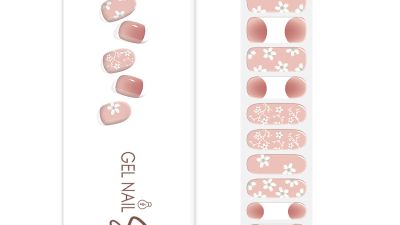
Wholesale Semi-Cured Gel Nail Strips: Floral Nude Pink Designs from China Factory Suppliers
Wholesale semi-cured gel nail strips in floral nude pink offer an elegant, easy-to-sell option for salons, beauty retailers, and online distributors. Made by experienced China factory suppliers, these strips combine soft nude tones with delicate floral details, creating a refined manicure style suitable for everyday wear, weddings, seasonal promotions, and special occasions. The five-layer construction supports reliable adhesion, rich color, and a smooth glossy surface, while multiple sizes make it easier to fit different nail shapes.
Designed for efficient application, each strip can be shaped and finished with quick UV or LED curing, helping salons serve more clients with less preparation time. The waterproof design and gentle formula support comfortable wear for up to 14 days when applied correctly, making the product attractive for repeat purchases and high-turnover retail displays. Bulk orders can be customized according to packaging, quantity, and market requirements, allowing wholesalers and retailers to build coordinated collections around floral nude pink designs and other popular manicure styles.
FAQS
: They are pre-cut nail coverings with a varnish layer, adhesive, backing film, and printed surface.
Wraps reduce drying time and spills. Liquid polish remains flexible but may smudge before it fully dries.
Wraps usually need fewer tools. Gel systems may offer stronger wear but require curing equipment and careful removal.
Yes, with accurate sizing, clean nails, firm pressure, and patience. Practice still matters.
An oversized wrap, oily nails, poor preparation, cold temperatures, or uneven pressure can cause lifting.
Test short, curved, and slightly oily nails. Track application time, lifting, finish quality, and customer feedback.
Include materials, labor, packaging, tools, shipping supplies, rent, training, fees, support, and damaged units.
Five percent waste sounds minor. Across many orders, sizing mistakes and damaged wraps can quietly reduce gross profit.
Review ingredients, adhesive materials, printed ink, warnings, directions, net quantity, supplier details, and disposal information.
No. Each claim needs reliable evidence. Vague wording may sound attractive but can be difficult to defend.
Conclusion
Nail Varnish Wraps offer businesses a practical alternative to traditional polish and gel systems by combining decorative finish, convenient application, and potentially lower service time. When evaluating this category, businesses should compare material costs, labor requirements, product waste, removal needs, and expected retail margins. They should also measure application speed and daily service capacity to determine whether wraps can improve productivity and support more customer appointments.
The market opportunity is substantial, with nail polish valued at approximately $14.3 billion in 2023 and the broader beauty market projected to approach $590 billion by 2028. Success depends on selecting suitable sales channels, understanding customer preferences, and testing demand through a controlled pilot. Key performance indicators should include conversion rates, repeat purchases, returns, average order value, and overall profitability. Before launch, businesses should also review ingredients, product claims, packaging information, and regional requirements to support responsible, transparent operations.