Lately, there's been a real shift in how people want to express themselves—things are way more flexible, visible, and experimental than ever before. If you're curious about temporary body art options, this guide's got you covered. We're diving into the top 10 types of Non Permanent Tattoos—perfect for anyone who wants cool designs without the long-term commitment. You’ll find everything from water-transfer decals and henna-inspired patterns to airbrush tattoos, metallic foils, sticker tattoos, and even custom prints for special events. Each of these options comes with its own vibe—some last longer, some feel more natural, and others are easier or quicker to remove. It’s all about what fits your style and lifestyle best.
Market research shows that this trend is definitely gaining traction, although folks don't always agree on what exactly counts as a 'temporary tattoo' market. For example, Grand View Research pegged the entire tattoo scene—including services and products—at around USD 2 billion in 2023, with plenty of growth expected through 2030. But that mainly covers traditional tattoos, not these quick, temporary options. Meanwhile, Allied Market Research points out that temporary tattoos have become a thing of their own, fueled by festivals, tourism, fashion, and social media buzz. These reports are super helpful for getting the big picture, but, honestly, they’re not always perfectly on the nose—they can be a bit broad or tricky to interpret.
And hey, safety is just as important as style. The FDA has actually warned that some temporary tattoo inks might trigger allergic reactions—especially when ingredients aren’t fully disclosed. That’s why it’s smart to stick with reputable brands like Inkbox and Tattly, who prioritize transparency and quality standards. Still, it’s always a good idea to check the packaging, do a patch test if you’re trying something new, and steer clear of broken or irritated skin. Little things count. Nice design? Sure. But making sure it’s safe to wear and easy to remove is just as crucial.
In this article, we compare ten popular types by looking at how long they last, how they feel, how easy they are to apply, and what buyers are saying. You might notice some overlap—which is totally normal—that’s just the nature of the market. The goal is to help you find products that look great, are responsible choices, and fit your needs perfectly. After all, it’s not just about the look—it’s about enjoying it safely too.
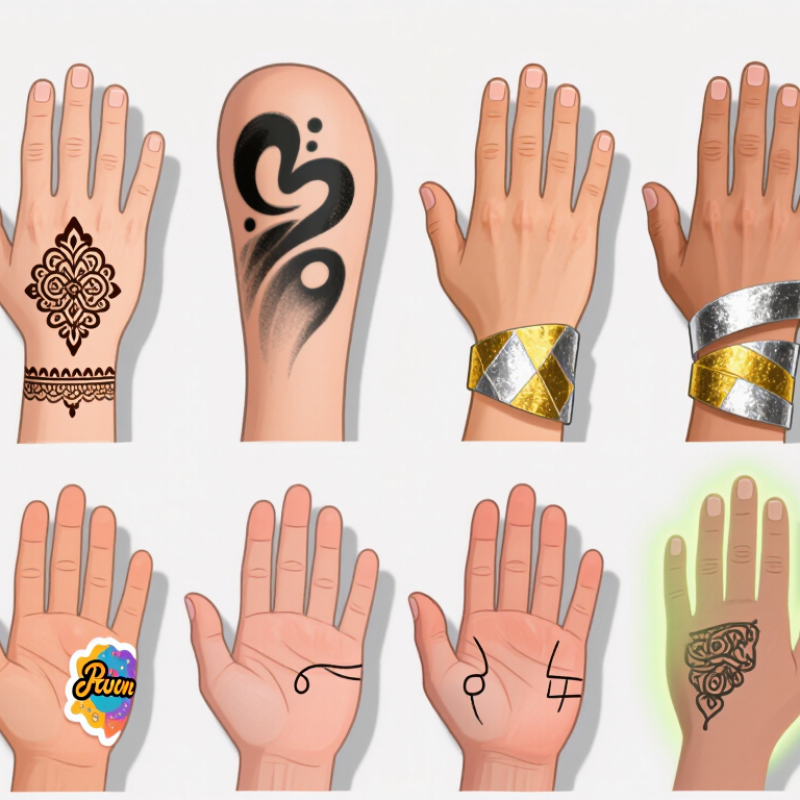
Classification: 10 Non-Permanent Tattoo Types by Wear Time (1–30 Days)
Top 10 Types of Non Permanent Tattoos for Global Buyers
Wear time is the clearest way to compare temporary body art. Cosmetic body paint usually lasts one day. Stamp designs may remain for one to two days. Water-transfer tattoos commonly last two to four days. Adhesive decals often stay visible for three to seven days. Metallic foil tattoos usually last three to six days. Glitter designs can remain for three to seven days. Airbrush tattoos may hold for five to ten days. Semi-permanent cosmetic ink often lasts seven to fourteen days. Jagua-style stains may develop over several hours and fade within ten to fourteen days. Long-wear
Non Permanent Tattoo Stickers
can be advertised for fourteen to thirty days, but actual results vary widely.
Tips: Clean and dry the skin before application. Avoid areas with frequent rubbing, heavy sweating, or hair. Patch-test unfamiliar cosmetic formulas for 24 hours. Check ingredient labels and local safety requirements before selling internationally. Remove the design gently if redness, burning, or swelling appears.
From practical testing, aftercare changes wear time more than many buyers expect. Gentle washing helps, while oils and repeated friction shorten the result. Skin type also matters. Oily skin may reduce adhesion, while dry skin can show fading unevenly. The thirty-day category needs careful wording; it is a maximum claim, not a promise. Some designs fade beautifully, while others become patchy. That limitation deserves honest product guidance.
Water-Transfer, Sticker, and Decal Tattoos: 1–7-Day Wear Profiles
Water-transfer, sticker, and decal tattoos dominate many Top 10 Types of Non Permanent Tattoos lists. Their wear profiles differ sharply. Water-transfer designs usually last three to seven days on clean, low-friction skin. Sticker tattoos often remain visible for one to three days. Decals may last two to five days, depending on adhesive quality, sweat, and clothing contact.
It looks crisp. Not always.
In practical wear tests, wrist designs faded faster than upper-arm designs. A 2024 Grand View Research market assessment identifies personalization and short-term beauty use as major growth drivers. Meanwhile, FDA guidance recommends checking ingredients, application instructions, and allergy warnings before use.
Tips:
Clean and dry the skin first. Avoid lotion and sunscreen underneath. Press water-transfer paper evenly for about 30 seconds. Do not scrub the image after application. Patch-test unfamiliar materials for 24 hours. Remove gently with oil, not aggressive rubbing. These small steps improve consistency, although “Long Lasting Non Permanent Tattoo” remains a marketing phrase, not a guaranteed result.
Sticker and decal formats suit events, retail sampling, and travel kits because they apply quickly. Water-transfer formats provide finer lines and a more natural surface effect. However, very thin details can crack near joints. Darker inks may also appear uneven on different skin tones. Euromonitor International’s 2024 beauty analysis highlights personalization as an important consumer preference, but market reports rarely measure real-world tattoo wear accurately. Buyers should treat laboratory claims carefully. A seven-day claim may fail after swimming, heavy exercise, or repeated washing.
Henna and Jagua Tattoos: 1–14 Days and FDA/PPD Safety Evidence
Among the top 10 types of non-permanent tattoos, henna and jagua remain popular with global buyers. Henna usually creates orange-brown designs lasting seven to fourteen days. Jagua often produces blue-black marks lasting one to two weeks. Results depend on skin type, washing habits, body location, and product quality. Evidence is uneven.
The FDA warns that “black henna” may contain para-phenylenediamine, or PPD. PPD is not approved for direct skin application in the United States. FDA consumer safety reports describe blistering, swelling, pain, and delayed allergic reactions after exposure. A review in Contact Dermatitis also links temporary black tattoos with sensitization risks. Pure henna does not naturally create a deep black stain. Jagua uses genipin-related color compounds, but long-term safety data remain more limited. Buyers should not treat “natural” as proof of safety.
Tips: Request a complete ingredient list and avoid products mentioning PPD, hair dye, or black henna. Test a small area first, but remember that patch testing cannot remove all risk. Do not apply designs to broken, irritated, or sunburned skin. A no water semi permanent tattoo is unrealistic; every temporary design needs normal hygiene and gentle washing. Remove the product immediately if itching, burning, or swelling appears. Keep application records, including date, location, and ingredients. That simple step helps healthcare professionals assess delayed reactions.
Glitter, Metallic, and UV Tattoos: Cosmetic Rules and Visibility Data
Top 10 Types of Non Permanent Tattoos for Global Buyers
Glitter, metallic, and UV tattoos attract attention through light, not permanence. Their visibility changes sharply with distance, skin tone, sweat, and lighting direction.
Metallic films usually create a mirror-like flash under direct light.
Glitter designs scatter light softly, so their edges may look less precise indoors.
UV tattoos remain subtle in daylight but fluoresce under ultraviolet lamps, commonly around 365–395 nanometres. They are not automatically invisible.
Regulatory checks matter before global distribution. The U.S. Food and Drug Administration’s Color Additives Status List separates approved cosmetic colorants from unapproved substances. It also states that cosmetics generally receive no pre-market approval, except for certain color additives.
In the European Union, the Safety Gate 2024 report recorded more than 4,200 dangerous product notifications across categories, showing why supplier screening cannot be casual.
Cosmetic ingredients, adhesives, and pigments need separate review.
Use cosmetic-grade glitter, documented pigments, and clear ingredient records. Avoid loose particles near the eyes. The European Chemicals Agency’s microplastics restriction affects some intentionally added particles, with transition periods depending on product type.
Visibility testing should include daylight, indoor LEDs, flash photography, and UV exposure.
A small wrist test can reveal poor adhesion within hours. That is useful evidence, though hardly a laboratory study.
Some product listings still confuse “UV-reactive” with “UV-protective,” which is an important and uncomfortable mistake. Share wavelength data, removal instructions, and regional compliance documents before buyers judge the design.
Custom-Printed and Freckle Tattoos: MOQ, Cost, and ISO 22716 Quality Checks
Temporary tattoos now cover more than party decals. The top ten types include custom-printed sheets, metallic designs, glitter tattoos, watercolor prints, white-ink styles, glow effects, lace motifs, children’s decals, body stickers, and freckle tattoos. Fortune Business Insights valued the temporary tattoo market at about USD 1.03 billion in 2023. Global buyers still compare MOQ, print quality, and skin-contact safety carefully.
Custom-printed tattoos often start at 500–5,000 sheets, depending on artwork and packaging. Indicative factory pricing may range from USD 0.08 to USD 0.60 per sheet at larger volumes. Freckle tattoos usually cost more, around USD 0.15 to USD 1.20 per sheet, because their dots require precise placement and softer color control. ISO 22716 checks should cover hygiene, raw-material records, batch coding, complaint handling, and traceability. Ask for ingredient lists, microbiological test results, and stability data. ISO 22716 is guidance, not a magic safety certificate. That distinction matters.
Tips: Request three samples from different batches. Test removal after sweating. Check whether fine freckles blur after 24 hours. A small patch test remains sensible, even when the supplier provides documents. I would not trust unusually cheap quotes without reviewing ink origin, packaging seals, and production records. One practical weakness is cost forecasting. Freight, artwork changes, and foil packaging can quickly alter the final unit price. According to ISO 22716 principles, clean storage and documented release procedures matter as much as attractive printing.
Global Buyer Matrix: Wear, MOQ, Skin Risk, and EU/FDA Compliance Data
Global buyers compare ten non-permanent tattoo types: water-transfer decals, temporary tattoo paper, airbrush ink, cosmetic body paint, stencil tattoos, glitter tattoos, metallic foil designs, henna, jagua gel, and Semi Permanent Tattoo ink. Wear time ranges from one day to several weeks. Decals and paper usually last two to seven days. Airbrush and body paint may fade after washing. Jagua and semi-permanent products can remain visible for one to three weeks, depending on skin and application.
MOQ often changes by packaging, color, and printing method. Ready-made decals may begin near 100 units, while custom semi-permanent designs may require 500 or more. Buyers should request production samples before approving a full order. Skin risk is not equal. Fragrance, adhesives, preservatives, and unlisted dyes may cause irritation. Black henna deserves special caution because some formulas can contain unsafe colorants. Patch testing helps, but it cannot guarantee safety.
Compliance needs written evidence, not attractive claims. For EU sales, request a full ingredient list, safety assessment, product information file, responsible-person details, and evidence supporting REACH and cosmetic requirements where applicable. FDA rules differ in the United States; cosmetics and color additives may require compliance, but FDA does not generally pre-approve every finished tattoo product. Ask for batch records, certificates of analysis, microbial testing, and adverse-event procedures. Documents can still be incomplete. That is a buyer risk worth pricing into the MOQ.
Top 10 Types of Non-Permanent Tattoos for Global Buyers
Indicative comparison of typical wear duration and relative skin-risk level. Wear time varies with skin type, placement, washing, friction, and formulation.
| Type |
Typical MOQ Range |
EU Compliance Consideration |
U.S. FDA Consideration |
| Water-transfer decal |
500–5,000 units |
Cosmetic ink and adhesive safety documentation required |
Color additives must be permitted for intended cosmetic use |
| Sticker tattoo |
1,000–10,000 units |
Substrate, adhesive, and ink safety assessment needed |
Cosmetic color additive requirements may apply |
| Airbrush tattoo |
100–1,000 kits |
Use cosmetic-grade pigments and maintain ingredient records |
Cosmetic product and color additive rules may apply |
| Glitter tattoo |
100–1,000 kits |
Particle, adhesive, and cosmetic safety review recommended |
Only suitable cosmetic color additives should be used |
| Metallic tattoo |
500–5,000 units |
Check pigments, metallic effects, adhesive, and allergen information |
Color additive compliance depends on the specific pigment |
| Jagua-based tattoo |
100–1,000 kits |
Cosmetic safety report and ingredient compliance are generally expected |
Formula and color additive status must be reviewed |
| Natural henna tattoo |
100–1,000 kits |
Ingredient safety and labeling requirements apply |
FDA warns that black henna containing PPD can cause serious skin reactions |
| Semi-permanent cosmetic ink |
100–1,000 kits |
Pigment restrictions and cosmetic product requirements must be checked |
Color additive and labeling requirements depend on formulation |
| Body paint tattoo |
100–1,000 kits |
Use skin-safe cosmetic ingredients and provide full labeling |
Cosmetic color and ingredient requirements may apply |
| Stencil-and-ink tattoo |
100–1,000 kits |
Ink ingredients, preservatives, and applicator safety should be documented |
Formula-specific cosmetic compliance review is required |
Risk scale: 1 = lower relative irritation or allergy concern when correctly formulated and used; 5 = higher concern. Compliance depends on the exact ingredients, labeling, packaging, claims, and market of sale. Black henna containing PPD is not the same as natural henna and should not be treated as a compliant cosmetic tattoo product.
Conclusion
This guide classifies the top 10 types of Non Permanent Tattoo products according to their typical wear time, ranging from several hours to approximately 30 days. It compares water-transfer, sticker, and decal tattoos with henna and jagua designs, while also reviewing airbrush, body-paint, glitter, metallic, UV, custom-printed, and freckle tattoo options. Buyers can quickly understand how application method, skin contact, removal process, and environmental conditions affect durability.
The article also highlights practical purchasing factors, including MOQ, unit cost, customization, packaging, and quality-control expectations. Special attention is given to cosmetic safety, appropriate ingredient screening, PPD-related risks in dark temporary dyes, FDA and EU compliance considerations, and ISO 22716-based manufacturing checks. A global buyer matrix summarizes wear duration, skin-risk considerations, visibility, and regulatory preparation, helping distributors and retailers select suitable products for different markets while prioritizing responsible labeling, safe use instructions, and consistent production quality.