So, buying Personalized Tattoos online can be pretty exciting—but let’s be real, a screen doesn’t show you everything. A design can look flawless on your phone and then turn out totally different once it’s on actual skin. That’s what this guide, “10 Tips for Buying Personalized Tattoos Online,” is all about: helping you make safer choices, talk things through more clearly, and keep your expectations realistic. It looks at the artist’s experience, their healed-work portfolio, hygiene standards, how they handle consultations, and the aftercare guidance they give. Honestly, those things matter way more than a flashy website.
So here’s a good way to think about it, straight from tattoo artist Dillon Forte: “A meaningful tattoo begins with a clear conversation, not a rushed purchase.” Honestly, that should guide every online order too. Before you book, ask who’s actually creating the design, who’s applying it, and whether revisions are included. And don’t just look at fresh ink—ask for close-up photos of healed tattoos. It’s also worth checking the studio’s credentials, how they handle sanitation, their cancellation terms, and what deposit they require. Oh, and if a seller promises the exact same result for every skin type? That’s a red flag—walk away. Look, no artist worth their salt can promise a perfect result without seeing your skin and talking through placement first.
Little things can save you from a big, expensive regret. So before you commit, save everything you agreed on—the design, measurements, colors, appointment details. Keep your personal info safe, and pay through secure methods. Make sure you know whether the design is one-of-a-kind or if it’s been reused. And don’t forget to ask how your artist deals with allergies, sensitive skin, or any medical issues. Online makes things easy, sure—but it can also make you feel a little too confident. I’ve noticed that buyers tend to get caught up in the picture and miss the relationship behind it. Honestly, that’s the part I’d reconsider. A thoughtful Personalized Tattoos purchase should leave room for questions, for a professional’s judgment, and for your own feelings—especially since those can shift over time.
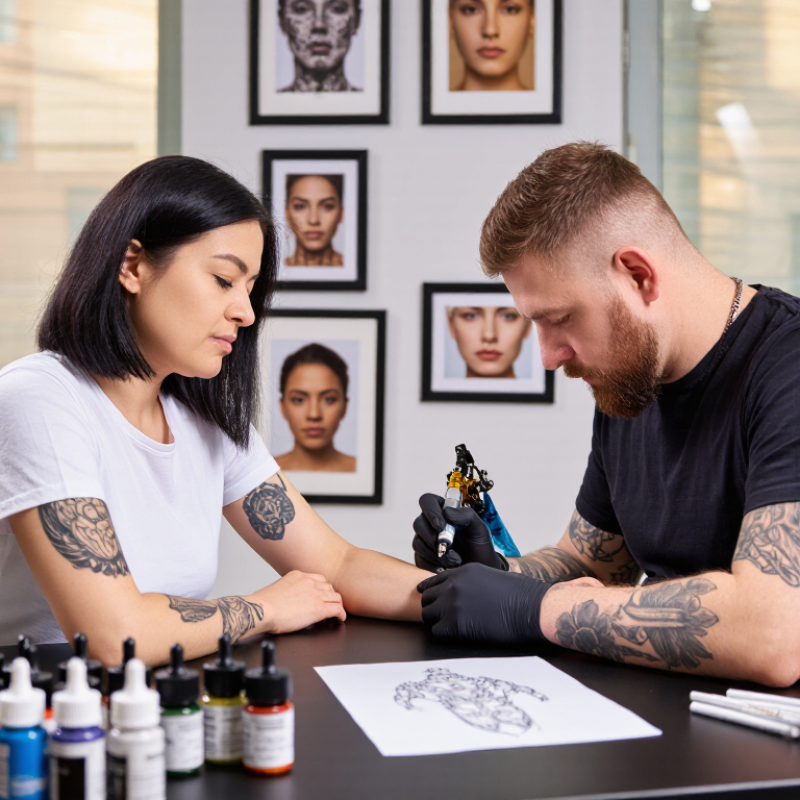
Define Your Custom Tattoo Brief: Style, Size, Placement, and Meaning
A strong custom tattoo brief prevents expensive misunderstandings. Pew Research Center reported in 2023 that 32% of U.S. adults have tattoos, including 22% with more than one. That personal history makes clear communication important. Describe your preferred style with concrete references: fine-line, blackwork, watercolor, geometric, or traditional. Avoid saying only “make it beautiful.” Mention line weight, contrast, shading, and whether the design should feel soft or bold.
Size needs measurable details. Give approximate dimensions in centimeters, not just “small.” A three-centimeter moon will lose tiny details. Placement also changes the design. A wrist design faces movement and visibility, while a rib design allows more vertical space. Send a clear photo of the intended area, with a ruler beside it. For Personalized Stick On Tattoos, confirm the skin-safe material, application time, and removal instructions. The U.S. Food and Drug Administration advises checking cosmetic ingredients and watching for irritation.
Meaning should guide the image, not control every detail. Explain the memory, person, place, or emotion behind it. One sentence may be enough. “A quiet reminder of recovery” gives useful direction without forcing a literal symbol. I have seen briefs become too crowded with meaning. That is worth reconsidering. Leave room for the artist’s visual judgment, and request a proof showing scale and placement before ordering. Grand View Research identified continued growth in the global tattoo market, but popularity does not replace careful customization.
10 Tips for Buying Personalized Tattoos Online
A clear custom tattoo brief should explain the visual direction, practical requirements, and personal meaning before an online consultation. The chart shows the recommended number of details to define for each planning area.
Verify Artist Credentials and Portfolio Quality: 32% of U.S. Adults Have Tattoos
About 32% of U.S. adults have tattoos, so personalized tattoo shopping deserves more than a quick image search. Before paying online, verify the artist’s name, training, working location, and current health or safety credentials. Requirements differ by place, but trustworthy artists explain them clearly. Ask where the tattoo will be performed, who handles sterilization, and how consultations are documented. Vague answers are a warning.
Study the portfolio beyond its newest posts. Look for healed tattoos, close photographs, clean linework, balanced shading, and designs on different skin tones. A strong portfolio shows consistency, not only dramatic pieces. Check whether the artist creates original work or repeatedly copies popular images. Request a sketch matching your size, placement, and preferred style. Save every revision in writing.
An experienced buyer should also question the process. What happens if the sketch feels wrong? Is the deposit refundable? How are allergies, aftercare, and touch-ups discussed? I once mistook polished presentation for technical quality. That judgment can be expensive. Look for clear consent forms, realistic timelines, and respectful communication. A small test of patience helps. If pressure replaces evidence, pause before committing to skin that lasts.
Assess Hygiene and Ink Safety Using FDA Injection-Use Guidance
Buying a personalized tattoo online begins with a safety conversation, not just a design preview.
Ask the artist how hygiene is managed before booking. FDA injection-use guidance offers a useful benchmark: materials entering the skin should be sterile, protected from contamination, and traceable. Tattooing is not the same as medical injection, and tattoo inks are not FDA-approved for injection. Still, these principles matter.
Request clear answers about sealed, single-use needles and disposable ink caps. Fresh gloves should be worn after setup and changed when contaminated. The artist should clean the workstation and prepare the skin with appropriate supplies. Ask to see the ink container, ingredient information, lot number, and expiration date. Do not accept ink poured into an unmarked cup. Leftover ink should not return to the original bottle. Small details matter.
Online photos cannot prove safe practice. A polished portfolio may hide poor preparation. I have learned that vague replies are useful warnings. Ask where the appointment will occur, who performs the tattoo, and how aftercare is explained. If the artist avoids hygiene questions, pause the purchase. Also discuss allergies, sensitive skin, and previous reactions with a qualified healthcare professional. FDA guidance can inform your questions, but it does not certify an online artist or guarantee a safe result.
Compare Quotes, Deposits, Revisions, and Refund Policies Before Paying
10 Tips for Buying Personalized Tattoos Online?
Before ordering Personalized Temporary Tattoos, request an itemized quote. It should include design work, printing, delivery, and taxes. Ask whether one design revision is included. Some sellers charge separately for every change. Compare at least three quotes, not just the final price. A low quote may exclude proofing or shipping. I once chose the cheapest option and missed a hidden setup fee.
Read the deposit terms carefully. Confirm the amount, payment deadline, and whether the deposit becomes part of the final price. Ask what happens if the artist cannot complete the order. A written agreement protects both sides. Keep screenshots of the quote, approved artwork, and payment receipt. Small details matter. Also check the claimed skin-safety information and application instructions. Reliable sellers should identify materials clearly and recommend a small patch test.
Refund policies need equal attention. Ask whether refunds cover cancelled orders, delayed delivery, printing errors, or artwork that differs from the approved proof. A policy saying “no refunds” deserves clarification before payment. For personalized products, refunds may be limited after production begins. That can be reasonable, but the timing must be clear. I would also ask how damaged sheets are handled. My own checklist is not perfect; I sometimes focus too much on price. A second review from a careful friend can reveal unclear wording, missing dates, or a design detail I overlooked.
Protect Your Personal Files and Payments with Secure Online Practices
Buying a personalized tattoo online can feel private, but your artwork request may reveal more than expected.
Share only the details the artist needs. Crop family names, addresses, or medical notes from reference images. Remove location metadata before uploading files. A small watermark can discourage casual reuse. Use a separate email address for design orders. It limits exposure if messages are forwarded. Ask how long files remain stored and whether deletion is available. Get that answer in writing.
Use the artist’s official checkout page, not a payment link sent through an unfamiliar chat.
Check for HTTPS and a clear business identity before entering card details. Never send card numbers, passwords, or one-time security codes in messages. A virtual card or payment method with dispute protection can reduce risk. Turn on two-factor authentication for your email and payment account. Save invoices, agreed revisions, and delivery dates in one folder. Screenshots help when details change later.
I once nearly approved a draft without checking the attached filename. That pause mattered.
Review the artist’s portfolio, privacy terms, and refund conditions with a critical eye.
Look for consistent work, transparent pricing, and specific answers to security questions. Ask whether your design may be posted publicly or used in advertising. Confirm who owns the final file and whether commercial reuse is allowed. Avoid sellers demanding urgent payment or unnecessary identity documents. If the seller resists basic questions, leave the order unfinished. I still miss small details sometimes, especially under time pressure. A second review by someone you trust can catch them.
Clarify Copyright, Consent, and Ownership of Custom or AI-Assisted Designs
Buying a personalized tattoo online is not only a design choice. It is a rights decision. Ask who created each line, who owns the source file, and whether the artist may resell it. The World Intellectual Property Organization reported over 14,000 generative-AI patent publications in 2023, up from 733 in 2014. Rapid growth does not make every AI-assisted image copyrightable.
Request a written license before paying. It should cover personal use, commercial use, edits, refunds, and resale. The U.S. Copyright Office’s January 2025 report explains that human creative input remains central to copyright protection. A simple prompt may not establish ownership. Ask for the artist’s original sketches, editing history, or a clear statement about AI involvement. Keep invoices and chat records.
Consent needs equal attention. Do not upload another person’s face, handwriting, or private photograph without permission. For Personalized Temporary Tattoos Bulk orders, confirm that the supplier can reproduce every submitted image lawfully. Check the proof carefully: a tiny altered symbol can change meaning on skin. I once underestimated that detail. That was careless. Also ask whether your design becomes part of a public portfolio. Many buyers assume silence means privacy, but it does not. A short contract feels inconvenient; losing control later feels worse.
Confirm Aftercare Instructions and Follow-Up Support Before Purchase
When buying a personalized tattoo online, confirm aftercare instructions before paying.
Reliable artists explain cleaning, moisturizing, sun protection, and expected healing stages clearly. Ask whether instructions arrive by email, printed card, or both. You should know how often to wash the area and which products to avoid. Clear guidance matters more than attractive portfolio images.
Follow-up support is equally important.
Ask who answers questions after the appointment and how quickly they usually respond. Confirm whether you can send a healing photo for professional feedback. A responsible artist should explain warning signs, such as spreading redness, unusual swelling, pus, or worsening pain. Seek qualified medical advice when symptoms seem serious. Do not rely on a seller’s message alone.
I once assumed a short care sheet was enough. It was not.
Vague advice can leave buyers guessing about peeling skin or accidental scratching. Ask about touch-up policies, healing problems, and design changes before purchase. If the seller also offers
Personalized Nail Decals,
request separate skin-safety guidance, since decals require different removal and wear instructions. Keep every message and receipt. Small details protect you.
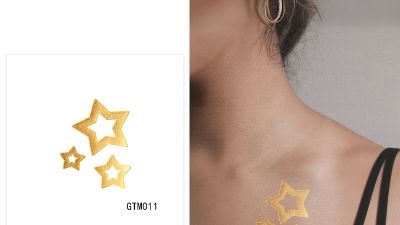
Gold Metallic Star Temporary Tattoos from China: Stylish, Waterproof, Customizable B2B Body Art Solutions
Metallic star temporary tattoos are becoming a practical choice for retailers, event organizers, and promotional campaigns seeking affordable, eye-catching body art. According to Grand View Research, the global temporary tattoo market was valued at approximately USD 1.2 billion in 2023 and is expected to expand at a growth rate of around 7% through 2030. This trend reflects rising demand for easy-to-apply, personalized accessories that support seasonal promotions, festivals, parties, and fashion-focused merchandising.
Produced in a China-based factory, these Gold Metallic Star Temporary Tattoos feature a four-layer structure: protective PET film, vibrant plant-based metallic gold ink, a breathable layer, and durable skin-safe adhesive. Their waterproof design helps preserve the reflective finish for approximately 3–7 days during bathing, sports, and daily activities. Application requires only water, while removal is clean and convenient, making the product suitable for retail packs, event giveaways, and branded promotional programs.
For B2B buyers, OEM and ODM services allow customization of artwork, packaging, sizing, and branding to match specific campaigns or sales channels. Quality assurance can include Microbiological Examination, EN71/2/3 testing, Microbiological Challenge Test, CPSR, and TRA assessment, supporting responsible distribution across different markets. With a distinctive metallic appearance and flexible customization options, star temporary tattoos offer a compact way to enhance product collections and create memorable customer experiences.
FAQS
Verify the artist’s name, training, working location, and current safety credentials. Ask who performs the tattoo and where it happens. Vague answers are warning signs.
Review healed tattoos, close photographs, clean lines, balanced shading, and different skin tones. Check older work too. New posts can look better than consistent work.
Yes. Request a sketch showing your size, placement, and preferred style. Save every revision in writing. Ask what happens if the design feels wrong.
Ask whether the deposit is refundable and when payment becomes final. Request clear timelines and written terms. Do not let pressure replace evidence.
Ask about sealed, single-use needles and disposable ink caps. Fresh gloves should be used after setup and changed when contaminated. The workstation should be cleaned carefully.
Ask to see the container, ingredient information, lot number, and expiration date. Ink should not enter an unmarked cup. Leftover ink should never return to its bottle.
No. Photos show appearance, not preparation. Ask how materials are protected from contamination and how hygiene is documented. A polished portfolio proves very little here.
Discuss allergies, sensitive skin, and previous reactions with a qualified healthcare professional. Ask how aftercare and touch-ups are explained. I once trusted presentation too quickly.
Pause when answers are vague, hygiene questions are avoided, or communication feels rushed. Skin is permanent. A little patience may prevent an expensive mistake.
Conclusion
Buying Personalized Tattoos online requires careful planning, research, and clear communication. Start by defining your tattoo brief, including the preferred style, size, placement, symbolism, and any visual references. Review the artist’s credentials, experience, and portfolio to assess consistency and quality; tattoo interest is widespread, with about 32% of U.S. adults reported to have tattoos. Before making a payment, ask about hygiene procedures, equipment, ink safety, and compliance with relevant health guidance.
Compare prices carefully, including deposits, revision limits, cancellation terms, and refund policies. Use secure payment methods and avoid sharing unnecessary personal files or sensitive information. Confirm who owns the final artwork, whether it may be used elsewhere, and how consent is handled for custom or AI-assisted designs. Finally, request clear aftercare instructions and learn whether follow-up support is available. A trustworthy process should provide transparency from the first design discussion through healing guidance, helping you make an informed and comfortable decision.